
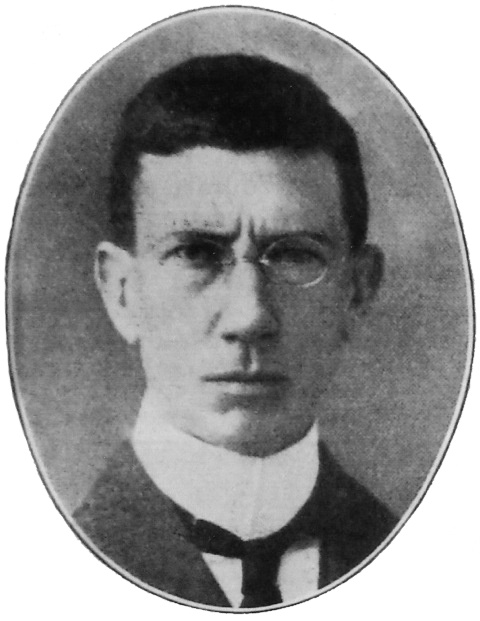
Herbert George Flaxman Spurrell stands out within my family history as a figure whose life moved far beyond the rural landscapes of Mid Wales into the international worlds of science, medicine, and imperial service. Though his career was cut short by the First World War, the scale of his intellectual achievement, and the geographical breadth of his work, mark him as one of the most remarkable individuals to emerge from this lineage.
Family Background and Formation
Herbert George Flaxman Spurrell was born in 1877, the only son of Herbert Spurrell (1847–1918) and Harriet Rebecca Blaxland (1849–1931), who married in 1876. As an only child, his position within the family carried particular weight, and it is notable that ambition, education, and outward-looking horizons shaped his life from an early age.
The Spurrell and Blaxland families belonged to that educated, professional stratum of late Victorian society which placed immense faith in learning, scientific progress, and public service. Herbert was described within family tradition as “extremely gifted”, a judgement borne out by the academic and professional path he followed.
Oxford and the Making of a Scientist
Spurrell was educated at Merton College, Oxford, an institution long associated with rigorous scholarship and intellectual independence. His time at Oxford placed him at the heart of a scientific culture that was expanding rapidly at the turn of the twentieth century, particularly in the biological and medical sciences.
He went on to build a career that combined biology, zoology, and medicine, disciplines that were closely linked in this period. Unlike purely laboratory-based scientists, Spurrell belonged to a generation for whom fieldwork, observation, and the classification of living species remained central to scientific advance.
Discovery and Fieldwork Overseas
One of the most striking aspects of Spurrell’s career was the geographical range of his work. He conducted research in West Africa and South America, regions which at the time offered enormous scope for zoological discovery. His work led to the identification of numerous species of fish, reptiles, and frogs, several of which were subsequently named after him, a lasting marker of scientific recognition.
This was demanding and often dangerous work, requiring physical endurance as well as intellectual skill. It placed him among that small group of Edwardian scientists who combined exploration with scholarship, operating at the edges of the known scientific world rather than within its metropolitan centres.
Academic Life in the United States
Spurrell’s reputation extended beyond Britain. For a period he worked in the United States as Professor of Physiology at the University of New Orleans, an appointment that reflects both his expertise and the international character of his career. Old Llyfnant Valley Farming Fam…
Such a post suggests a scientist of considerable standing. It also illustrates how fluid academic life could be in this era, with talented individuals moving between continents in pursuit of research, teaching, and professional opportunity.
War Service and Final Illness
The First World War redirected Spurrell’s career from science to service. He joined the Medical Corps, applying his medical and scientific knowledge to the demands of wartime. He later served on the Medical Board of the Royal Air Force in Egypt, a role that placed him within the rapidly developing world of military aviation medicine.
In 1918, while still on active service in Egypt, Herbert George Flaxman Spurrell died of pneumonia. He was forty-one years old. His death, occurring so close to the end of the war, forms part of the wider, often overlooked toll that disease took on professional and service personnel during the conflict.
Assessment and Legacy
Spurrell’s life encapsulates many of the defining features of his generation, intellectual confidence, global mobility, scientific optimism, and a strong sense of duty. He moved with ease between Britain, Africa, South America, and the United States, leaving tangible contributions to zoology and medicine, before ending his life in service during a global war.
Within the context of my wider family history, he represents an outward-facing, international strand, contrasting with the farming, Nonconformist, and community-rooted lives that dominate much of the Llyfnant Valley story. His career reminds us that Welsh and Welsh-connected families did not merely respond to modernity, they actively shaped it, contributing to global knowledge and scientific understanding.
Though his life was brief, Herbert George Flaxman Spurrell left behind a legacy measured not in length of years, but in depth of achievement.
Note on Sources and Family Record
Herbert George Flaxman Spurrell appears in my book Old Llyfnant Valley Farming Families, where his life and achievements are recorded within the wider context of the extended family network connected to the Llyfnant Valley and Mid Wales. His inclusion reflects the outward reach of these families beyond agriculture, demonstrating how education, science, and international service formed an important parallel strand to the rural Welsh story traced throughout the volume
 Antony David Davies FIoL FRSA FRAS AFRHistS MCMI