
I am Antony David Davies, a Welsh historian, biographer, and cultural commentator. My work explores the overlooked lives and moral worlds of rural Wales — its farming families, Nonconformist chapels, local institutions, and the inherited codes of duty, belief, and respectability that shaped everyday life.
Through books, long-form biography, and public writing, I seek to recover fragile records and silenced voices, and to place them back within their proper historical, cultural, and human contexts. Much of my work is rooted in long-term genealogical and archival research, but it is also shaped by lived experience and a deep personal connection to the landscapes and communities I write about.
I am particularly concerned with how power, memory, and authority operate — within families, churches, charities, workplaces, and civic life — and with what happens when those structures fail the people they are meant to serve. My writing asks not only how the past worked, but what it still demands of us.
This site brings together my books, published articles, and ongoing research, alongside reflections on history, identity, governance, and cultural responsibility in modern Wales.
➡️ Read my published articles
➡️ Explore my books & research
📘 Latest publications
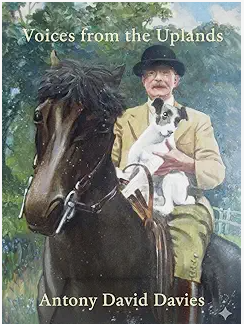
I’m pleased to share my latest book, Voices from the Uplands: The Davies Family and the Soul of Rural Wales, now available on Amazon. With a foreword by Elinor Bennett O.B.E., the book explores the rich cultural, social, and familial heritage of the Davies family of Caeadda, set within the wider story of Montgomeryshire’s upland communities and the disappearing world of rural Welsh life.
Drawing on archival research, oral testimony, and over twenty years of genealogical and historical study, Voices from the Uplands traces how identity, tradition, faith, and landscape shaped generations of families in the Dyfi valley. From Nonconformist chapels to sheep walks and farm kitchens, it offers an intimate portrait of a community whose rhythms and values once defined upland Wales.
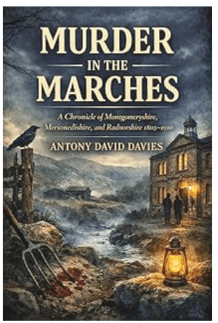
This new book examines homicide and serious violence in Montgomeryshire, Merionethshire, and Radnorshire between 1805 and 1910, drawing on contemporary newspaper reports, inquest evidence, and assize records. Rather than treating these cases as sensational true crime, the study approaches them as social and legal history, rooted in place, community structure, and the practical workings of justice in rural Wales and the borderlands.
Through a series of closely researched case studies, the book explores how violence was understood, investigated, and judged before modern forensic science, and what these episodes reveal about class, reputation, gender, mental illness, and the limits of nineteenth-century policing.
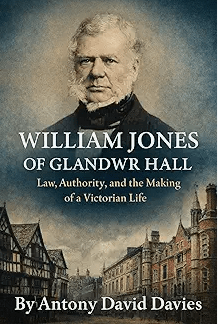
This biography examines the life of William Jones (1792–1882), a Welsh-born solicitor who rose from a commercial household in Dolgellau to become a long-serving civic figure at the heart of the City of London, before returning to Wales as a landowner and magistrate.
Based on extensive archival research, the book traces Jones’s legal training at Lincoln’s Inn, his Chancery practice at Crosby Square, more than fifty years of civic service as a Common Councilman for Bishopsgate, and his involvement in Welsh Anglican and cultural institutions in London. It also explores the acquisition of Glandwr, the exercise of local authority in Merionethshire, and the limits of institutional power when metropolitan habits met rural society.
Written as a professional and institutional biography rather than a family memoir, this study uses Jones’s life to illuminate how authority was constructed, exercised, and contested in nineteenth-century Britain, and how Welsh identity could be sustained within the structures of the British state.
 Antony David Davies FIoL FRSA FRAS AFRHistS MCMI