
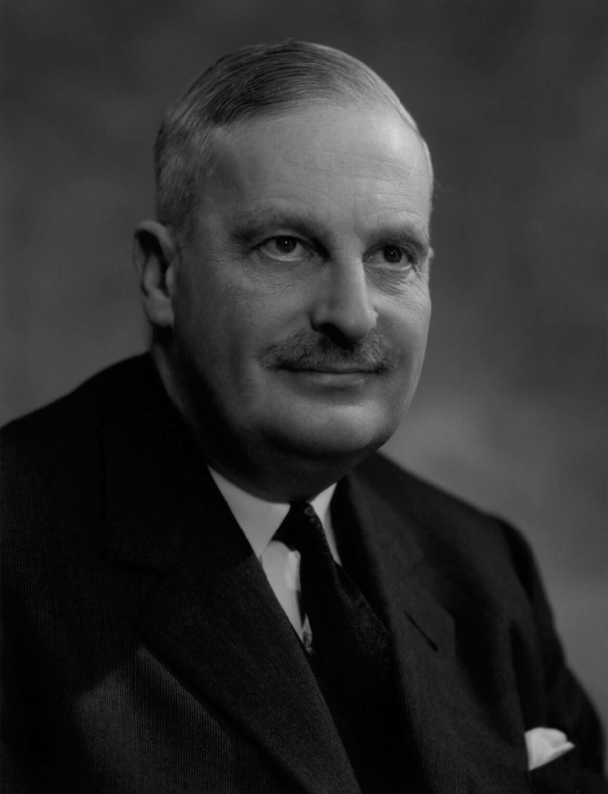
When I trace the beginnings of my love of history, I always return to one figure — Sir Philip Magnus-Allcroft of Stokesay Court, the elderly baronet who, quite unknowingly, set a child on the path to becoming a historian.
I met him in the great Shropshire house that dominated my early world. He would summon me with a gentle smile and, almost ceremoniously, produce a small box of chocolates. Before I could claim one, though, he would ask a question: “Now then, what do you know about kings and parliaments?” or “Why do you think people built such large houses in the first place?” They were never tests; they were invitations to think. I answered as best I could, and he would nod approvingly, perhaps adding a few words about Gladstone or Raleigh — names that meant little then but became lifelong companions.
Those short conversations taught me that curiosity mattered, that ideas were worth exchanging, and that kindness and intellect could sit easily together. Looking back, I realise that Sir Philip was the first true scholar I ever met — and that the chocolates were merely the pretext for a lesson far sweeter.
From Westminster to Oxford
Sir Philip Montefiore Magnus was born in 1906 into a family of learning and public service. His grandfather, the first Sir Philip Magnus, had reformed technical education and served as an MP; his father, Sir Laurie Magnus, was a classical scholar and publisher. Surrounded by books and debate, the younger Philip developed an early taste for literature. When his parents banned Dracula as unseemly, he borrowed another copy from the London Library — a small act of rebellion that revealed both independence and imagination.
At Westminster School he won prizes for poetry and debate, and at Wadham College, Oxford, he immersed himself in modern history. Tall, impeccably dressed, and quick-witted, he was remembered for combining academic seriousness with humour — qualities that would define his writing.
War, Marriage, and Stokesay Court
After a brief spell in the Civil Service, he inherited the baronetcy in 1933 but sold the family estate to meet death duties. During the uneasy 1930s he moved in literary and political circles, at first intrigued by movements promising renewal but soon repelled by their intolerance. By the time war came, his moral compass was set.
Serving in the Royal Artillery and later the Intelligence Corps, he was posted to Iceland, Northern Ireland, and finally Italy. It was while stationed near Ludlow that he met Jewell Allcroft, heiress of Stokesay Court. They married in 1943, and he converted to Anglicanism — not out of expedience but affection and respect. When Jewell inherited Stokesay in 1950, they added “Allcroft” to the family name and settled there for life.
The Biographer
After the war Sir Philip devoted himself to biography, producing a series of acclaimed studies: Edmund Burke (1939), Sir Walter Raleigh (1951), William Gladstone (1954), Lord Kitchener (1958), and King Edward VII (1964).
His Gladstone sold more than 50,000 copies and restored serious political biography to public favour. In 1971 he was appointed CBE for services to literature.
What set him apart was empathy. He wrote not to judge his subjects but to understand them — to show how private conscience shapes public action. That same moral curiosity infused the questions he asked me in childhood.
The Country Gentleman
At Stokesay he lived as a scholar-squire, serving on Shropshire County Council, acting as JP, and sitting on the boards of the National Trust and the National Portrait Gallery. He corresponded with The Times, championing education and good manners, and presided over local meetings with quiet civility. Visitors recall his courtesy, his love of conversation, and his eccentric habit of sunbathing in a full suit and overcoat beneath a sombrero.
The Final Years and Legacy
Sir Philip never lost his composure or curiosity. He continued to read, to host occasional guests, and to watch the Shropshire hills with affection. He died peacefully at Stokesay Court on 21 December 1988, aged 82. His plaque in Onibury Church bears the simple words:
“Biographer and Historian.”
His friend Elizabeth Longford wrote of him:
“Philip was a wonderful person with whom to visit the past, both on paper and in reality.”
Reflection
When I look back now, I see more than a baronet or a biographer; I see the kind old man who offered me chocolates and questions — who showed a child that ideas are worth savouring and that history is, at heart, a moral conversation between generations.
Every time I open an archive box, weigh a sentence, or try to capture a life on paper, I feel the echo of those afternoons at Stokesay Court. The chocolates are gone, but the questions remain — and they continue to guide me, as surely as they once did in his study so many years ago.
 Antony David Davies FIoL FRSA FRAS AFRHistS MCMI