
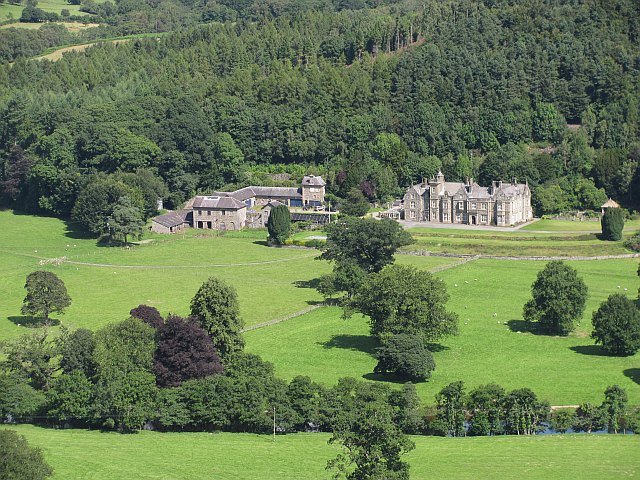
The mid-1990s were years of transition in rural Wales. Farming incomes were under strain, country houses were redefining their purpose, and politics in Britain seemed poised between the certainties of Thatcherism and the coming landslide of New Labour. For me, those years were marked most vividly by the Doldowlod Hall estate on the upper reaches of the River Wye, where my father worked as the resident gardener and where I spent my teenage summers.
A Country House in a Changing World
Doldowlod Hall stands just south of Rhayader, its nineteenth-century house set amid mature parkland planted when Victorian industrial wealth met Welsh landscape romanticism. By the 1990s, many estates of its kind were fragmenting—land sold off, great rooms closed, maintenance pared back. Yet Doldowlod remained resolutely a lived-in country home, not a museum. The Gibson-Watt family had maintained the property through the turbulent post-war decades, balancing tradition with the practicalities of modern life.
Lord David Gibson-Watt: The Forester
Lord Gibson-Watt was in his seventies when I knew him, a tall, quietly commanding figure with a ready smile. A former soldier and politician, he carried the authority of someone who had seen both Westminster and the wartime front, yet he moved through the estate with a neighbourly ease. Forestry was his consuming interest. One autumn afternoon he invited me to help plant a young oak. As we dug, he spoke of soil health, the spacing of trees, and the patience required to manage woodland over generations. That simple act of planting a sapling became a lesson in stewardship – how decisions made in an hour could shape a landscape for a century.
Lady Diana Gibson-Watt: Mentor and Employer
It was Lady Gibson-Watt whom I came to know best. Energetic and warm, she treated the estate’s young helpers with a mixture of high standards and genuine affection. During school holidays she created my first paid employment: odd jobs around the grounds and house, complete with homemade timesheets and the careful counting of hours. Receiving those wages felt like a rite of passage, a bridge between adolescence and the adult world of work.
Gardening was her great love. Though I lacked her passion for herbaceous borders, I was captivated by her stories – recollections of the gardens in their original splendour, of head gardeners and their teams who had tended them in a lost era, of the gradual changes wrought by austerity and shifting fashions. She often reflected, with a trace of melancholy, on the decline of the traditional country-house world, when dozens of gardeners once laboured where now a one sufficed.
Politics, Patriotism, and Conversation
Lady Gibson-Watt was also unapologetically political. A staunch Conservative, she delighted in quizzing me on current affairs, urging me to follow the 1995 Conservative leadership contest with interest. She encouraged me to form my own opinions, even when they diverged from hers. “Always thank God you’re British,” she would remind me – less a jingoistic command than a heartfelt expression of gratitude for the stability and traditions she cherished. Those conversations initiated a lifelong curiosity about politics and public life, even if I never felt drawn to an active political life.
Formative Years
By then I was already a budding historian, shaped earlier by Sir Philip Magnus-Allcroft at Stokesay Court, whose encouragement had stirred a love of archives and the layered narratives of place. At Doldowlod that interest took on a living dimension. Here was history not confined to dusty documents but embodied in people, landscapes, and daily rituals.
The estate’s quiet grandeur, the rhythm of seasonal work, and the Gibson-Watts’ gentle authority impressed on me a sense of continuity: that the past is never truly past, but a presence shaping the present. When I look back, those summers between 1995 and 1997 were more than teenage holiday jobs. They were an apprenticeship in civility, responsibility, and historical awareness—a conversation between past and present that continues to guide my work as a historian today.
 Antony David Davies FIoL FRSA FRAS AFRHistS MCMI