
By Antony David Davies FRSA
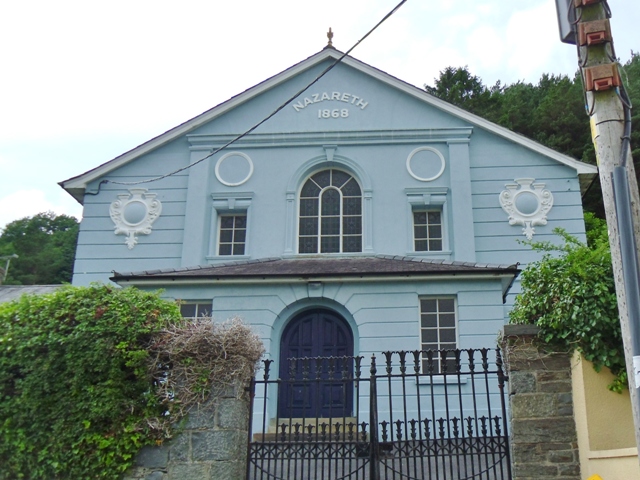
In the upland heart of north Cardiganshire, where the hills of Taliesin and Talybont cradle the Dyfi valley, the life of John Davies of Erglodd stands as a shining example of rural Welsh piety, service, and enduring influence. Known in his lifetime as “Apostol y Plant” – the Children’s Apostle – he was celebrated for his devotion to the Sunday School movement, his deep commitment to chapel life, and his work among the poor.
Born at Esgair Hir, Llanwrin, Montgomeryshire on 19 November 1821, and dying at Erglodd, near Llancynfelyn, on 15 June 1887, he was my first cousin three times removed. As a historian, I consider it a privilege to honour his memory and restore his legacy to its rightful place in the historical record of Welsh Nonconformity.
Champion of the Sunday School Movement
John Davies’s greatest contribution lay in his lifelong dedication to Sunday Schools, then the backbone of religious and educational life in Welsh Nonconformity. In an era when formal education was limited and often conducted in English, the Sunday School offered both spiritual formation and literacy, all through the medium of Welsh.
For over thirty years, Davies taught, led, and organised Sunday School work in Taliesin, Talybont, and the surrounding area. He was praised for his rare ability to engage children—not by rote or fear, but through gentle questioning, clarity, and warmth. His pupils were known locally for their deep biblical knowledge, and newspapers of the time lauded him as a “great communicator with children”.
He served as secretary and later president of the district’s bimonthly Sunday School meetings, and in 1878 he was presented with a painted portrait and formal address in recognition of his service—a remarkable honour for a layman. During his lifetime, he became known as the Methodist version of Robert Owen, for his influence on child education and social reform.
A Chapel Elder and Builder of Community
Davies was also a leading elder at Taliesin chapel, and one of the founding members of the Methodist cause at Talybont, where he served as deacon and spiritual guide. He was a committed Calvinistic Methodist, and a regular participant in the wider Methodist Association of North Cardiganshire.
Later in life, he consciously mentored younger men, ensuring the future of the cause beyond his own lifetime. Like the biblical King David assigning duties to the Levites, he prepared the next generation to carry the chapel forward. His leadership was grounded not in dominance but in foresight, service, and trust.
Family and Life at Erglodd
John Davies lived his adult life at Erglodd farm, which he inherited from his father Thomas Davies, a farmer and devout Methodist who had moved there in the 1850s. John was a farmer by trade, working the land while devoting himself to chapel and community service. who had moved there in the 1850s. John never married, but shared the household with his sister Elizabeth Davies, a formidable woman in her own right who served as treasurer of the local Charity Club during the 1870s. Together, they raised Elizabeth’s daughter Mary Jones, after the death of her husband William Jones.
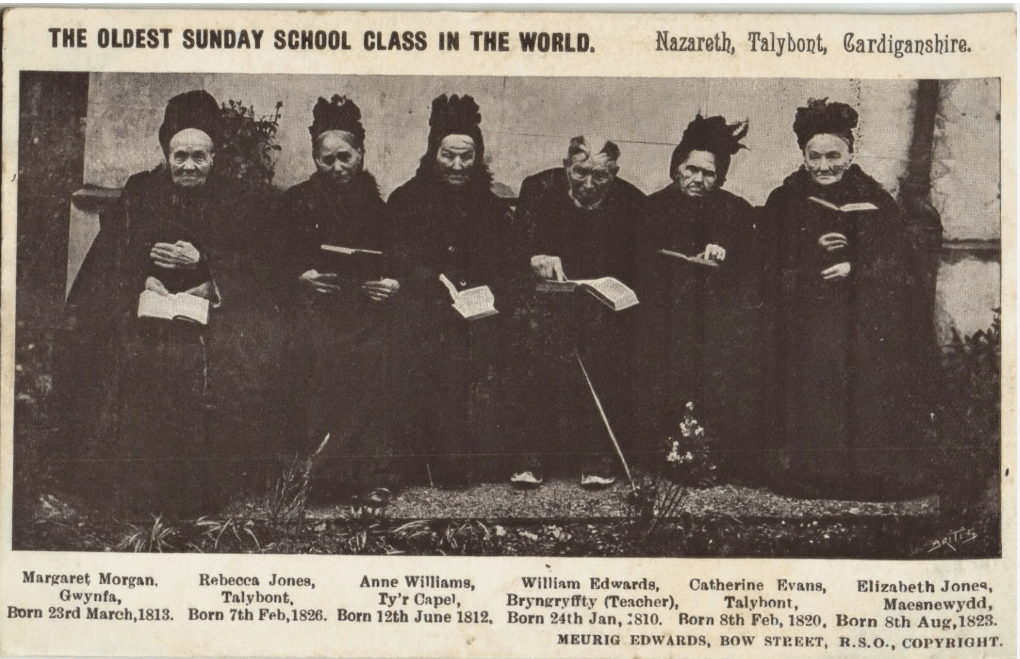
Mary would go on to marry James Thomas Morgan, a wealthy landowner and Justice of the Peace at Talybont. He became a Cardiganshire County Councillor, deacon, and treasurer of the Methodist chapel in Talybont. At their home, Maesnewydd, Mary and her mother Elizabeth became known for hosting travelling preachers and supporting religious causes. It is a testament to John Davies’s influence that his values lived on so clearly in their household.
Advocate for the Poor and Temperance
John Davies’s public service extended far beyond the chapel. In the 1870s, he was a prominent member of the International Order of Good Templars, promoting total abstinence from alcohol. He was a popular public speaker, known for his humour and moral clarity, and a strong voice for the temperance cause in North Cardiganshire.
From 1882 until his death, he served on the Aberystwyth Board of Guardians, administering the Poor Law and overseeing the welfare of the most vulnerable. Guardians were responsible for the local workhouse, and for distributing relief to the poor and sick. In addition to these duties, Davies donated a sheep each year so that the poor of Taliesin could enjoy a Christmas meal—a gesture typical of his quiet generosity.
A Final Trial and a Lasting Witness
John Davies died at Erglodd on 15 June 1887, aged 65, of “general decay brought about by chronic eczema”. He had suffered for eighteen months from a rare and painful condition, which those close to him likened to the trials of Job. Ministers who spoke at his funeral remarked not only on the mystery of his suffering, but on the patience and grace with which he bore it.
On Saturday 18 June 1887, despite the summer heat, mourners gathered in large numbers to escort his body to Nazareth cemetery, Talybont, where he had requested to be buried. The funeral was attended by many of the leading ministers of the Calvinistic Methodist tradition, whose tributes spoke to the depth of affection and esteem in which he was held.
One eulogist observed: “He wrote his elegy in his life.” Another noted that “mildew ripens the grain” — a poetic reflection on the spiritual fruit of his final affliction. The children he taught, the men he mentored, the poor he supported: all were part of the harvest he left behind.
Legacy
John Davies of Erglodd was never a man of wealth, office, or printed fame. Yet he left behind a moral and spiritual legacy that shaped a region. Through Sunday Schools, temperance work, chapel leadership, and private charity, he influenced the character of a generation. His memory was cherished in Taliesin and Talybont long after his death, and it is not too much to say that he embodied the best of Welsh Nonconformity in its golden age.
As his kinsman, I am proud to place on record this tribute to a man whose life mattered deeply to the community he served, and whose quiet greatness deserves to be remembered.
 Antony David Davies FIoL FRSA FRAS AFRHistS MCMI