
By Antony David Davies FRSA
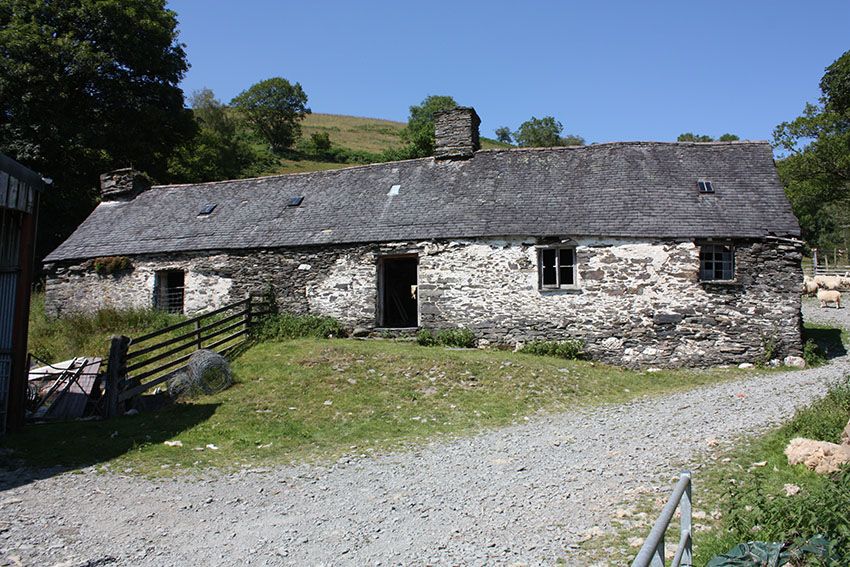
High in the forgotten uplands of Montgomeryshire, where bracken folds over ancient sheep paths and the hills roll unbroken into silence, there stands a farmhouse my family still speaks of in reverent tones. Its name is Esgair Llywelyn — Llywelyn’s Ridge.
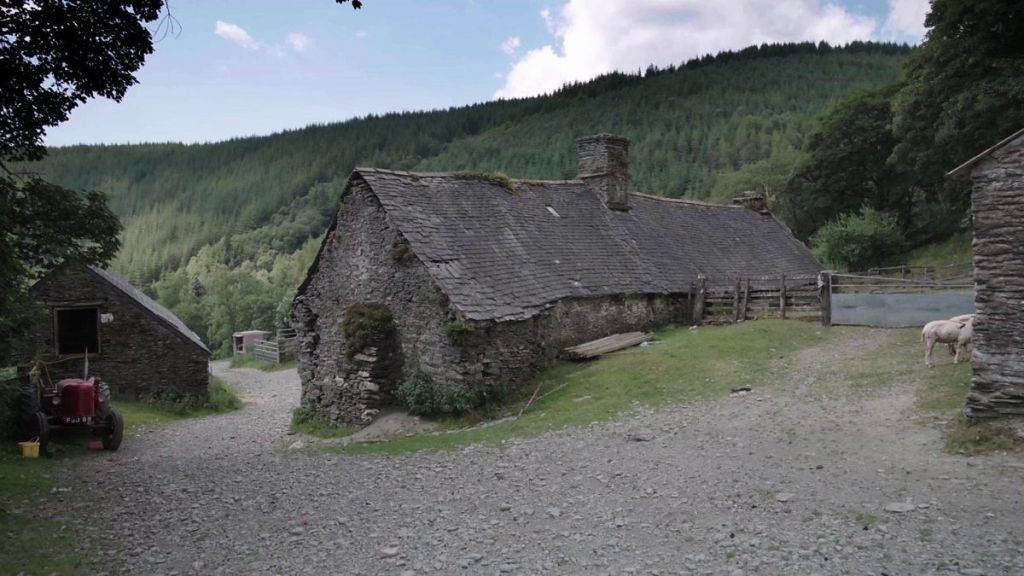
Even now, the place endures. Weathered, empty, but defiantly upright. Whitewashed stone walls streaked with rain, a slate roof patched against time, its windows hollow and still. Sheep graze beyond the yard. A faint track climbs towards the door — but few now follow it.
And yet the name remains.
And with it, a legend that has haunted my family — and perhaps the nation — for more than seven hundred years.
They say that in the dark winter of 1282, with Edward I’s armies ravaging the valleys and betrayal closing in from all sides, Llywelyn ap Gruffudd, the last native Prince of Wales, was given shelter by my ancestors in that lonely, wind-lashed place.
A Whisper Passed Down Through Generations
I first heard the tale as a child — half a joke, half a warning:
“You know we once hid the Prince of Wales, don’t you?”
Years later, I discovered that this wasn’t just romantic embroidery. It was a deeply embedded family memory, rooted in land, language, and maternal testimony.
In her moving autobiography Tannau Tynion — part of the Cyfres y Cewri (“Giants Series”) — my cousin, the renowned harpist Elinor Bennett Wigley, gives voice to the same story. She writes of how her grandparents began married life at Esgair Llywelyn in the early 1900s, and how her mother, was born there — in the old box-bed where, according to local lore, one of our ancestors may once have hidden or shared a room with the fugitive prince.
“The farm,” she writes, “got its name because Llywelyn the Last took shelter there around 1280, when he was trying to reclaim lands between the Dyfi and Dulas rivers, near Llanwrin.”
Even the landscape seems to remember. Not far from the farm runs a stream known as Nant y Floeddiast — “The Stream of the Bloody Beast.” Local legend says that Llywelyn abandoned his wounded horse there as English soldiers closed in.
One Visit — and a Lifetime of Echo
I have only been to Esgair Llywelyn once. It’s hard to find. The paths are overgrown, the name half-forgotten. But when I stood there among the ruins, something shifted in me. The wind moved through the doorway like it was trying to speak.
I don’t know if Llywelyn truly stood there. But the silence felt heavy — like grief that hadn’t finished speaking. Like a truth not recorded in books, but carried in bone and breath.
What History Forgets, Wales Remembers
We know that in his final years, Llywelyn travelled through central Wales, rallying support from southern lords. He was at Aberedw. He was near Builth. The stretch of land between Machynlleth and Llanwrin — remote, wild, and fiercely loyal — would have made a natural refuge.
History forgets such details. But Wales does not.
We don’t always build monuments. We build memory. We pass stories through families, down chapel aisles, across windswept hills. We encode grief into place-names, and pride into lullabies.
And so a weathered farmhouse becomes more than stone. It becomes part of a nation’s long vigil.
What the Prince Carried
Llywelyn ap Gruffudd was not just a war leader. He dreamed of a Wales that could speak in its own voice — a parliament, a university, a church free of foreign bishops. His vision was one of dignity, not domination.
When he was killed at Cilmeri in 1282, it wasn’t just a man they tried to silence.
It was an idea.
With him died the last real hope of a sovereign Wales — for Llywelyn was the only native ruler ever formally recognised by the English Crown as Prince of Wales. His death marked not only military defeat, but the start of centuries of dispossession.
Why It Still Matters
People ask why these stories still matter. Why return to ruins? Why chase shadows?
But this isn’t just history. It’s identity. When my family remembered the prince who once hid in our hills, they weren’t merely sharing a tale — they were holding the line. They were reminding us that we were once a people who risked everything to protect their own, even when the world turned dark.
And perhaps, in some quiet, necessary way, we still are.
For any culture that has lived in the shadow of a larger neighbour, these stories aren’t simply memories.
They are acts of survival.
They are how small nations endure.
One Final Thought
Esgair Llywelyn still stands. Just barely. The roof holds. The doorway gapes. Sheep still pass. The wind still sings through the stones.
And though I’ve only been there once, that was enough.
Because whether Llywelyn ap Gruffudd ever truly stood on that ridge or not, I know this:
Wales did.
And some part of her still does.
 Antony David Davies FIoL FRSA FRAS AFRHistS MCMI