
By Antony David Davies FRSA
It is hard to overstate just how close we are to losing the living memory of rural Wales.
Across our hills and valleys — from the sheep farms of Montgomeryshire to the slate towns of Gwynedd and the quiet chapels of Ceredigion — traces of family and community life are disappearing at an alarming rate. Battered photograph albums, humble chapel registers, dusty wage books — they tell the story of who we are. Yet every year, more slip into silence.
I’ve watched with no small heartbreak videos of so-called “urban explorers” creeping through abandoned Welsh farmhouses. They gasp as they open drawers to find wedding portraits, school certificates, funeral cards. These are not curiosities for YouTube clicks. They are the life stories of families — our families — dissolving into mould and oblivion.
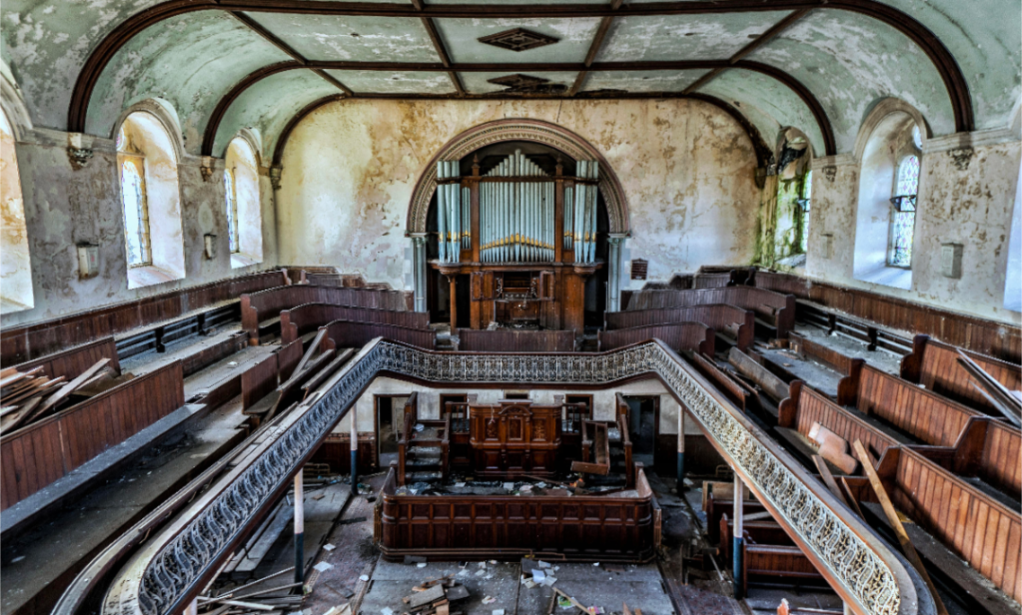
Meanwhile, the official historical record that should safeguard our collective memory is already dangerously incomplete. Nowhere is this clearer than in our great Nonconformist tradition. Chapels were once the beating heart of Welsh spiritual, cultural and political life. Yet their records are heartbreakingly patchy. Some gaps exist because chapels weren’t compelled to keep official registers before 1837. Many more were lost to damp vestries, careless reorganisations, or sheer indifference when congregations closed. I’ve heard of precious ledgers simply burned, or left out for “anyone who wanted firelighting.” Who now can trace their kin through those lost pages?
It bears repeating: under the law, a county archive is only obliged to preserve what is actually deposited. Councils cannot retrieve what was thrown out decades ago, nor conjure up ledgers never handed over. The survival of our records has always depended on local families, chapel officers and quarry clerks realising their worth before it was too late.
This crisis stretches beyond chapels. Across the slate valleys of the north, derelict offices still cling to the hillsides — haunting shells of once-mighty quarries. Even now, they may shelter old maps, account books, pay slips. Each is a fragile window into our industrial past, and without intervention will soon be destroyed by weather, vandals or casual neglect.
That is why I am calling on the Senedd to create a dedicated heritage taskforce — a team with the backing to go out into our communities, knock on doors, speak with chapel deacons, farm families and local historians, to see what precious records still survive in private hands. They could arrange to digitise, catalogue and safeguard these before they are lost forever. The same must apply to what remains in barns, vestries and disused quarry buildings — so often overlooked simply because no one thinks them important enough to save.
Because make no mistake: time is running out. In another generation, countless rural and industrial stories will have died with the last who remembered them. Meanwhile, thousands of family albums lie in sideboards and lofts, waiting for damp, death or house clearances to scatter them forever. Each is a small archive of the soul of Wales — telling of christenings and harvests, market days and Eisteddfods, wedding dances in barns, stoic faces outside limewashed farmhouses.
That is why I urge everyone who cares about Welsh history to act now. Speak to older relatives and neighbours while you still can. Ask them who people were in old photographs. Copy images, label them carefully, and share them with your wider family. And — crucially — consider uploading them to People’s Collection Wales, a magnificent online archive that lets us safeguard our grassroots heritage for future generations.
My forthcoming book, Voices from the Uplands: The Davies Family and the Soul of Rural Wales, is my own small attempt to capture this vanishing way of life — to give voice to communities whose stories risk slipping quietly from view. But no single book can save this heritage. It is a task that belongs to us all: individuals, families, and crucially, our nation’s government.
So let us honour our ancestors by ensuring their stories do not fade. Let us be the generation that rescued Welsh memory from oblivion. Let us demand that our leaders treat these humble records — from chapel registers to slate mine wage books to battered family albums — not as quaint relics, but as the very fabric of who we are.
If you have old family photographs, please consider copying and submitting them to People’s Collection Wales. And above all, keep talking — because every memory shared is a thread woven back into the tapestry of our national story.
 Antony David Davies FIoL FRSA FRAS AFRHistS MCMI
Leave a comment